
-
- 22.02.2026

PDRN Has Quickly Taken Over Skin Care
 Illustration by Mark Baker-Sanchez; Source Images: Adobe StockSave this storySave this story
Four little letters have taken over the skin-care industry as of late: PDRN, the newest K-beauty ingredient popping up in moisturizers, masks, and serums. It’s part of the regenerative skin-care wave featuring treatments that promise to make your cells act younger. While the acronym itself sounds more clinical than catchy, PDRN is a whole lot easier to remember than polydeoxyribonucleotide, the technical term it stands for, which is an ingredient derived from salmon DNA.
“PDRN is an upcycled ingredient from the food industry’s salmon farms—it’s not like people are raising salmon to get this DNA,” says cosmetic chemist Perry Romanowski (who can’t help but chuckle at several points during our interview). “That happens in the cosmetics industry a lot—we get leftover stuff from other industries, like petroleum from oil production. Otherwise, these ingredients would just be waste.”
In this story:LargeChevron
- What is PDRN?
- Why are we putting salmon sperm on our faces?
- What does PDRN do in topical skin care?
- Does PDRN skin care work?
- If PDRN doesn’t do what it’s supposed to, why the preoccupation with it?
- Does any regenerative skin care work?
- Shop our PDRN product picks
What is PDRN?
The short answer is salmon sperm. The more nuanced, more accurate answer is that it is fragments of salmon DNA taken from said sperm. These samples (the sperm) have been collected from salmon farms and purified (hopefully a lot). Microscopic pieces of that salmon DNA are then sold by ingredient suppliers to brands and cosmetic chemists who blend PDRN with other active ingredients in their formulas.
Maybe you think this sounds intriguing, exciting, or is a whole new level of crazy for an industry that’s already peddled beef tallow balms, bee venom creams, and snail mucus serums. Maybe you’re just curious to know if there’s any chance that it works.
Or maybe you’re wondering who had the idea to take salmon sperm and put it on our skin in the first place. It’s a fair question.
Why are we putting salmon sperm on our faces?
Long before K-beauty brands set their sights on PDRN, it started as an injectable, but not for smoothing wrinkles. Initially, it was injected near chronic wounds, such as diabetic ulcers, to aid in healing—a therapeutic approach that’s been supported by studies dating back to the early 2000s.
It’s not uncommon for researchers to look to the oceans for new drug sources. They do, after all, comprise the world’s largest habitat, explains one peer-reviewed article on marine drugs. DNA-derived medications, meanwhile, have been studied since the 1970s, and research suggests sperm “are the most appropriate cells to provide highly purified DNA without risk of impurity,” as detailed in a study published in the journal Frontiers in Pharmacology.
So there you have it: sperm, salmon, DNA. The path that led us here isn’t quite as out-of-left-field as you might have thought. “PDRN has been used in regenerative medicine for years, especially in Europe and Asia. There is credible clinical use of [injectable] PDRN in medical settings for wound healing and ulcers,” says Mona Gohara, MD, a board-certified dermatologist in Hamden, Connecticut, “and it is generally well-tolerated for medical use.”
“There is credible clinical use of [injectable] PDRN in medical settings for wound healing and ulcers.”
There’s also a link between these medical PDRN injections and that holiest of holy grails in skin care: collagen production. When PDRN is injected into the subcutaneous layer (the deepest layer of the skin) during wound treatment, it has been shown to engage adenosine A2A receptors on skin cells, according to a study published in Biomaterials Research. That can help with wound healing, in part, because activating these receptors can trigger—you guessed it—new collagen formation.
“Think of the skin cell as a ball, and the receptor is sticking out on top of it like a light switch,” explains Dr. Gohara. “PDRN injections are basically turning on the switch to wake up the cells and hopefully get them to produce more collagen.”
As for the link between salmon sperm and human skin, that has to do with the composition of DNA itself, no matter where it comes from: “The rungs of the DNA ladder are made up of the same four chemicals,” says Romanowski. So, when salmon DNA meets human skin cells, it can bind to those A2A receptors.
What does PDRN do in topical skin care?
Because A2A receptors are involved in collagen production, the skin-care world’s hope is that putting PDRN in creams and serums can also “reinvigorate the skin’s own system for turning these receptors on,” says Dr. Gohara. “It’s a fascinating, if not magical, bridge between medicine and aesthetics.”
The thinking goes, if PDRN can engage with cell receptors as a regenerative injectable drug, then when it is used topically as a skin-care ingredient, perhaps it can also “help stimulate tissue repair, boost microcirculation, and reduce inflammation—basically encouraging skin to heal and function more efficiently, improving skin texture, elasticity, hydration, and overall radiance,” says Dr. Gohara.
Non-medicinal PDRN has been around for years in Korea: Salmon sperm facials may kick off with microneedling, followed by a salmon sperm serum applied all over the skin. These and injectable PDRN skin boosters—which reach more superficial layers of skin vs. subcutaneous wound-healing injections—preceded and ignited the current PDRN topical skin-care craze.
Says Melissa K. Levin, MD, a board-certified dermatologist in New York City, “PDRN’s claim to fame is that it is one of the most popular skin-care treatments in a very discerning market—Korea—and has been for over a decade.” But whether you’re talking about injectables, facials, or serums, “there aren’t a ton of clinicals supporting [its use in aesthetics],” she adds. “The marketing is moving faster than the science.” (There is no FDA-approved aesthetic injectable form of PDRN in the US.)
“The marketing is moving faster than the science.”
The promise of making skin act younger through an unforgettable ingredient like salmon sperm is marketing gold. Salmon sperm is just quirky enough to grab our attention and pique our interest. “The beauty industry thrives on the ‘next thing,’” says Romanowski. “If you can create a story around an ingredient, that ingredient is going to be hyped up.”
Adds cosmetic chemist Kelly Dobos, it’s an evocative way of dangling that “promise of youthfulness we’re all chasing.”
Does PDRN skin care work?
There’s a difference between hype and hard data, “and I’m skeptical as to how well the data is substantiating PDRN’s skin-care claims,” says Dobos. Studies on PDRN as a skin-care ingredient have largely been conducted in petri dishes, with PDRN applied directly to cells. Says Romanowski, “The evidence that we have on PDRN’s benefits is in cell cultures, where it can do things like turn off melanin production. That’s not the same thing as saying, ‘If you put this in a cream, and put that on your skin, it’s going to work.’”
Also, there’s a lack of data showing that PDRN truly works when it’s used in skin care. It all boils down to a basic physics problem: “There’s a principle in skin care that something can only penetrate your skin if it’s small enough—typically 500 daltons,” explains Romanowski. “These fragments of DNA are 50 to 100 kilodaltons in size, so that’s 1,000 times bigger than they would need to be in order to penetrate.” And they’d need to penetrate all the way to the dermis (the middle layer of skin) to reach receptors on cells—sitting on the surface of the skin isn’t nearly enough.
And this assumes that there even is PDRN in your skin care by the time you slather it on—a major assumption you probably don’t want to make. As a raw ingredient, PDRN is plagued by a bunch of “questionable situations in cosmetic formulation,” says Dobos. For starters, it has to be kept at a specific temperature to remain stable. This won’t be replicated in your bathroom vanity, so “there’s concern about whether PDRN can survive the [minimum] two-year shelf life of a skin-care product,” says Dobos.
Actually, the ingredient might not even survive the formulation process: “PDRN is wildly fragile,” says cosmetic chemist Marisal Mou. “It is unstable, finicky to formulate with, and [prone to] oxidation,” which means it breaks down when exposed to air. We are talking about genetic material from a living creature, after all.
“PDRN is wildly fragile… unstable and finicky to formulate with.”
To really pile on here, even if you could buy PDRN in an airtight container, secured in a box that is set to the optimal temperature, and it is somehow able to defy physics to get through your skin, there’s a chance it could carry proteins from its donor with it. What’s the problem there? “Proteins on any biological materials can be a source of allergic reaction in skin care,” says Dobos. Some brands are looking into plant-derived PDRN, she adds, but you could run into similar allergen issues with that.
The push for vegan PDRN seems to be coming mostly from US brands, says cosmetic chemist Amanda Lam, who is intrigued by the fact that we tend to tolerate more from the K-beauty sphere. “If a Western consumer is buying a Western brand, they care more about it being cruelty-free,” she observes, “but they'll buy snail mucus from a Korean brand.”
If PDRN doesn’t do what it’s supposed to, why the preoccupation with it?
“It’s fascinating to see the magnitude of how quickly PDRN has blown up in the skin-care world,” says Lam. “The idea of it is just so flashy.”
The attraction goes beyond the novelty of sperm in skin care. “There’s so much discussion about living healthier and longer,” says Dobos. “PDRN is just part of our innate desire to want to stay younger longer (I know I want to), but I’m very skeptical about whether PDRN’s benefits in wound-healing models can translate to topical application.”
Dobos also thinks the rush to jump on the PDRN bandwagon could be detrimental to the ingredient’s long-term reputation. “We saw it with CBD in cosmetics, too, frankly; we just weren't sure of the benefits of it, but it sounded really interesting. This is another case where there's a lot of hype, but not enough substantiation for me to put my faith in it,” she explains.
The same could be said for topical exosomes, the other darling of the regenerative skin-care movement: Like PDRN, they are being hyped for their ability to make skin act younger. And like PDRN, the massive claims about exosomes are much bigger than the actual science.
Does any regenerative skin care work?
Just because there’s a lack of data on PDRN and exosomes, that doesn’t mean regenerative skin care is a complete hoax—far from it. Decades before PDRN and exosomes were the elements du jour, researchers were amassing data on a handful of ingredients that have since been well-proven to help skin function more efficiently. But back then, those ingredients weren’t labeled as “regenerative” or “longevity” drivers.
The chemists and dermatologists we spoke with like vitamin C and peptides for boosting skin’s own collagen production; nianiacinamide for regulating cells’ melanin production; and retinoids for…everything, really. Retinoids, a.k.a. vitamin A derivatives, are one family of ingredients backed by decades of research showing they can trigger collagen production and help create skin that looks younger in the long run.
You’ll probably find at least one of these other ingredients listed alongside PDRN in formula breakdowns. “That’s essentially how skin care works,” says Romanowski; the ingredients that “help the marketing people tell a story” get combined with the ones that are actually “providing the benefits—your petroleum, your mineral oils, your glycerins that nobody wants to talk about.”
These ingredients may not have the shine of being new and strange, but they do have staying power. The popularity of PDRN, meanwhile, “will probably fade in a year to two, unless we get some really good data and ways of stabilizing it,” says Dobos.
But that won’t be easy, or cheap, says Mou: “Formulators would have to work with smaller molecular-weight PDRN, pair it with an optimized delivery system, and the sourcing of the DNA fragments would be of utmost importance. Extraction quality, purity level, uniform fragment size distribution—all of these considerations lead to an increase in the cost of the ingredient.”
It’s more likely that PDRN will be replaced by the next oddball thing, which will probably come from the biotech world, guesses Romanowski. “That's where our industry is going,” he says. “Sometimes new ingredients have a lasting impact, but most of the stuff that you're using now is essentially the same as you were using in the ’90s. The technology hasn’t changed that much.”
It does, however, get packaged differently and spruced up with the latest trendy ingredient. “The beauty industry is very much like the fashion industry, where they always need something new,” Romanowski continues. “But at the end of the day, it's still pants and shirts.”
Shop our PDRN product picks
Here are some of our favorite PDRN-spiked products. We can’t say for sure if PDRN is doing any heavy lifting, but each product includes ingredients that have proven benefits.
Medicube PDRN Pink Collagen Gel Mask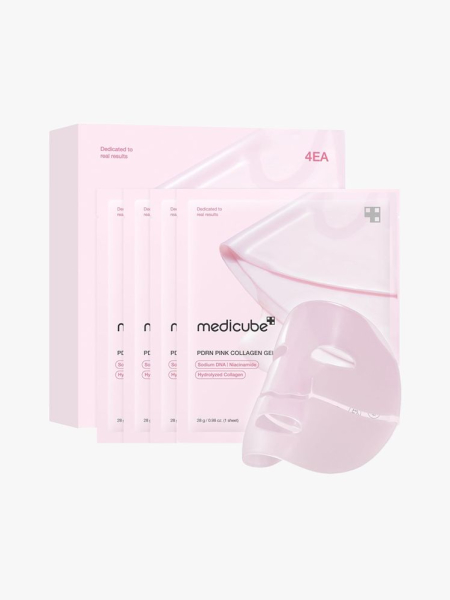 Save to wishlist
Medicube
PDRN Pink Collagen Gel Mask
Amazon
Nordstrom
Ulta Beauty
PDRN + Glycerin. The exact benefits of PDRN may be unclear, but goodness, does this hydrogel mask feel amazing. “Hydrogel masks are water and a gelling agent that get mixed together, poured into a mold, and turn into a jelly that’ll evaporate on your skin and feel really nice and cooling,” says Lam. This pink version doesn’t disappoint. “You wear it overnight and it feels great,” adds Lam, who guesses that PDRN might be suspended in the mask—“a bit like fruit in Jell-O”—while hydrating ingredients such as glycerin make the skin dewy.
Rejuran Dual Effect Ampoule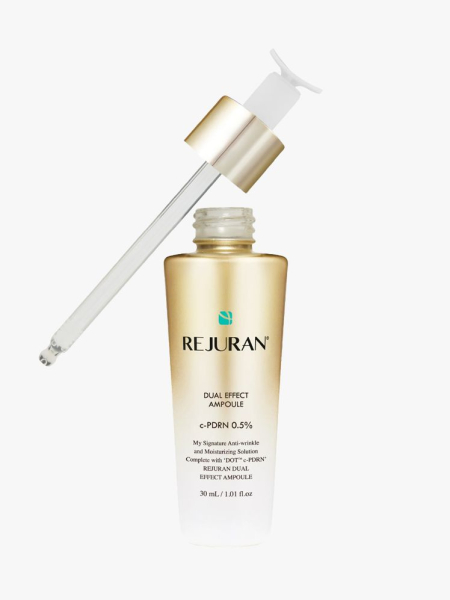 Save to wishlist
Rejuran
Dual Effect Ampoule
Amazon
Stylevana
PDRN + Ceramides. This K-beauty serum is a favorite of Mou’s, who likes that the brand’s clinical testing suggests the formula may help repair the skin barrier and support collagen synthesis. It is made by Rejuran, “a biopharmaceutical company that has a strong presence in Korean skin care,” she notes.
If you want to take PDRN skin care for a whirl, Mou suggests Reuran’s formulas: “Their’s is the closest thing to ‘clinical PDRN skin care’ that you can get, in my opinion. Many other brands are riding the wave with very limited clinical evidence that their formulas work,” she explains, adding that “two products can say PDRN in the ingredients list, but the fragment size and purity level can be totally different.”
With that in mind, PDRN from K-beauty brands might be the way to go, adds Dr. Gohara. “It has been part of the K-beauty armamentarium for so much longer than it has been in the US,” she says. “Those are the ones I would gravitate more towards.”
IOPE PDRN Caffeine Shot Serum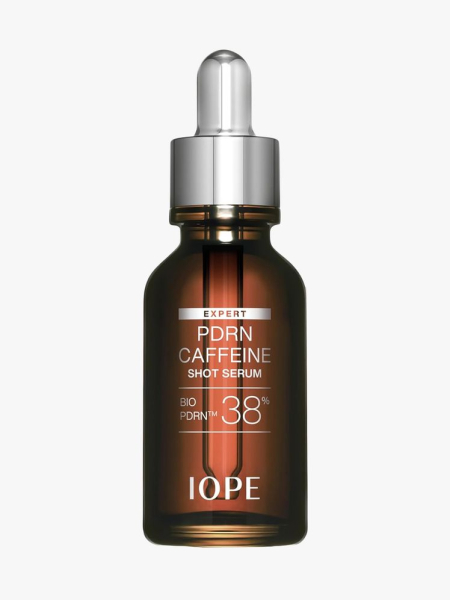 Save to wishlist
Iope
PDRN Caffeine Shot Serum
Amazon
Sephora
Soko Glam
PDRN + Niacinamide. A trailblazer in vegan PDRN, IOPE has been formulating products using DNA fragments from plants (instead of fish) for a few years now. In this serum, green tea-derived PDRN is paired with multitasking niacinamide, the vitamin B-derivative antioxidant that has been shown to help brighten discoloration, soothe redness, and strengthen the skin barrier.
Lancôme Absolue Longevity The Soft Cream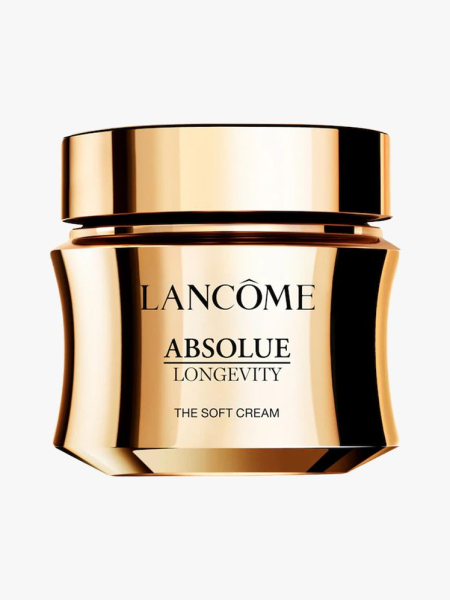 Save to wishlist
Lancôme
Absolue Longevity The Soft Cream
Amazon
Nordstrom
Sephora
PDRN + Shea Butter. There’s something to be said for trying a fad from a legacy brand, says Dobos, one that has more resources to work with. “Small brands can jump on trends quickly, and maybe don't put time into doing research,” she points out. “I actually have some concerns around brands, including some K-beauty brands, that may be prioritizing speed over safety and efficacy testing.” Lancôme is one major skin-care brand dabbling in PDRN, with a formula that’s loaded with skin-softening, radiance-enhancing moisturizers—shea butter, oils, and glycerin.


